
One of the most important things that makes College Football so great is the stadium environments. You just don’t see the same fervor, intensity and spirit in other sports. A College Football Gameday in a great stadium environment is the best feeling in the world – and these environments are almost always best when they’re on campus and really retain the identity of the school. Thus, we think almost every team should play in an on-campus stadium. Here’s our list of programs that should invest in an on-campus stadium next.
Pitt
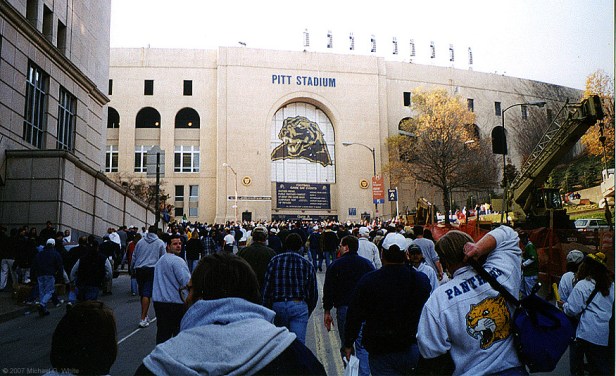
The Panthers currently play at Acrisure Stadium downtown, a shared space with the Steelers. Pitt Football used to have an on-campus stadium, Pitt Stadium, but it was demolished in 1999 to make way for a new events center, with the Panthers moving to the Steelers stadium the next season where they have played since.
UConn
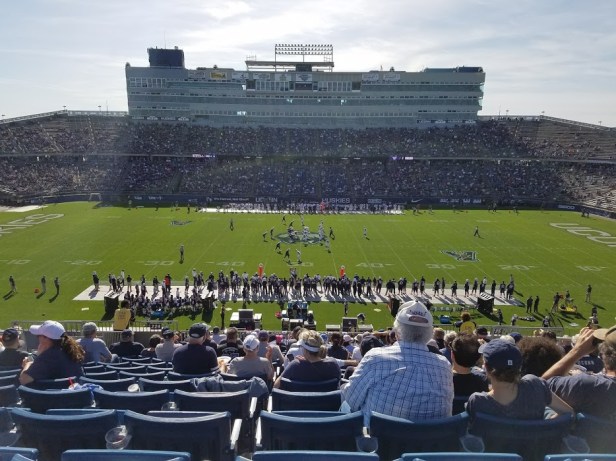
The Huskies play their home games at Rentschler Field, a decent-sized stadium located over 30 minutes away in East Hartford. While “The Rent” offers a solid game-day experience, and features the Huskies as its primary tenant, the off-campus location creates a disconnect with the student body. Requiring bussing back and forth from games reduces the amount of students who goes to games. An on-campus stadium would potentially create a better homefield advantage for the UConn Huskies.
Miami
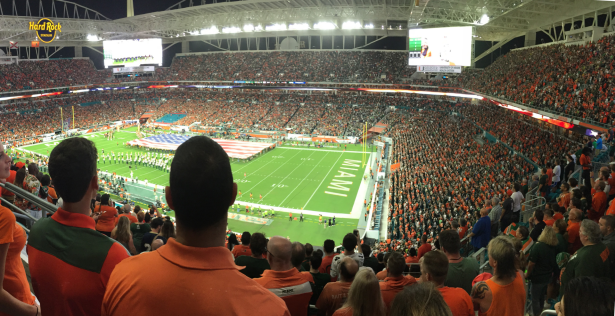
The Hurricanes share Hard Rock Stadium with the Miami Dolphins, a significant distance from the Coral Gables campus. Getting from campus to the football stadium can be over 40 minutes, and even longer on gamedays. Hard Rock Stadium just feels a bit too soulless for one of the most historic programs in College Football, which could be greatly remedied with an on campus stadium. That being said, the Hurricanes have played in an off-campus stadium for pretty much their entire history, with the original Miami Orange Bowl being their home from 1937 to 2007. So, of all the teams on this list, they’re identity most matches playing further away in the city.
Temple
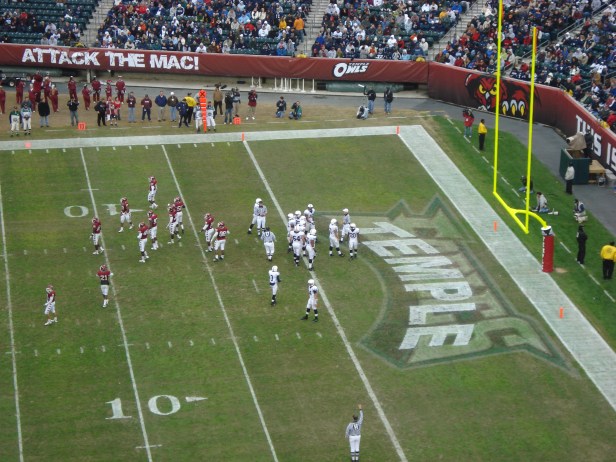
The Temple Owls share the massive, 67K capacity stadium Lincoln Financial Field with the Philadelphia Eagles. While “The Linc” offers a professional-grade experience, it’s far from Temple’s North Philadelphia campus. An on-campus stadium, even a more modest one, would be transformative for the Owls. The Owls rarely fill up much of The Linc, so a more appropriately sized and easy to get to environment could energize the Temple student body, hopefully making gamedays a bigger part of campus life and boosting student attendance. Plus, the increased revenue potential and branding opportunities would be a significant boon for the recently struggling program, allowing Temple to create a better football identity and home-field advantage.
UNLV
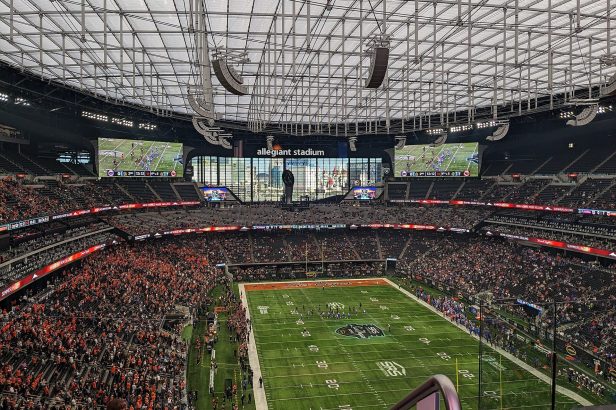
The UNLV Rebels play in the impressive, death-star-like Allegiant Stadium, a shared home with the Las Vegas Raiders built in 2017. While Allegiant is a state-of-the-art facility and UNLV playing there was factored into its construction, its location, while a relatively close to 3 miles from the UNLV campus, still presents some barrier to student engagement and, perhaps more importantly, doesn’t really foster a college football feel and identity. UNLV owns Sam Boyd Stadium, a stadium even further from campus in Whitney, NV, so at least Allegiant has brought them closer despite no longer being owned by the University. But, given UNLV Football’s recent resurgence and increased investment from the university, they should be on the short list to receive their own home turf.

 CFB Select


